

From Emerald Archipelago to Silicon Islands

Indonesia’s Bold Leap into the AI Century
eyesonindonesia
The Indonesian government is not merely watching the digital revolution; it is architecting it through a multi-decade master plan known as “Visi Indonesia 2045” (Indonesia Vision 2045). At its heart lies the Digital Indonesia Roadmap, a strategic compass designed to transition the nation from a resource-based economy to an innovation-driven global powerhouse.
By the time Indonesia celebrates its centenary in 2045, the government aims for the digital economy to contribute 20% of the national GDP, up from roughly 6% today.
The Four Strategic Pillars
The roadmap is built on four interconnected domains that serve as the foundation for this digital leap:
- Digital Infrastructure: This is the “hard” layer. The goal is to eliminate the digital divide across the archipelago. Key projects include the Palapa Ring (a massive fiber-optic backbone), the rollout of 5G networks, and the construction of National Data Centers to ensure data sovereignty.
- Digital Government: Known as SPBE (Sistem Pemerintahan Berbasis Elektronik), this pillar focuses on migrating all public services to a unified digital ecosystem. The aim is to increase transparency, reduce bureaucracy, and use AI to make civil services—from healthcare to tax filing—proactive rather than reactive.
- Digital Economy: This pillar targets the lifeblood of Indonesia: its MSMEs (Micro, Small, and Medium Enterprises). The government is aggressively pushing to onboard 30 million MSMEs into the digital ecosystem, providing them with AI tools for logistics, fintech for credit, and global e-commerce access.
- Digital Society: The “soft” layer. Technology is useless without a literate workforce. The roadmap includes massive digital talent scholarship programs (such as Digital Talent Scholarship) to train millions of Indonesians in AI, cybersecurity, and cloud computing.
National AI Strategy (Stranas KA) 2020–2045
To ensure AI isn’t just a buzzword, the government launched a specialized National Artificial Intelligence Strategy. It identifies five “Priority Sectors” where AI must be the primary driver of development:
- Health: Using AI for remote diagnostics in islands where doctors are scarce.
- Bureaucracy: Implementing AI to automate civil service tasks and detect corruption.
- Education: Personalized AI learning platforms to bridge the gap between urban and rural schools.
- Food Security: Integrating AI with IoT (like the eFishery example mentioned earlier) to optimize harvests.
- Smart Cities & Mobility: Redesigning urban centers (including the new capital, IKN Nusantara) to be autonomous and data-driven.
The “Golden Indonesia” 2045 Goal
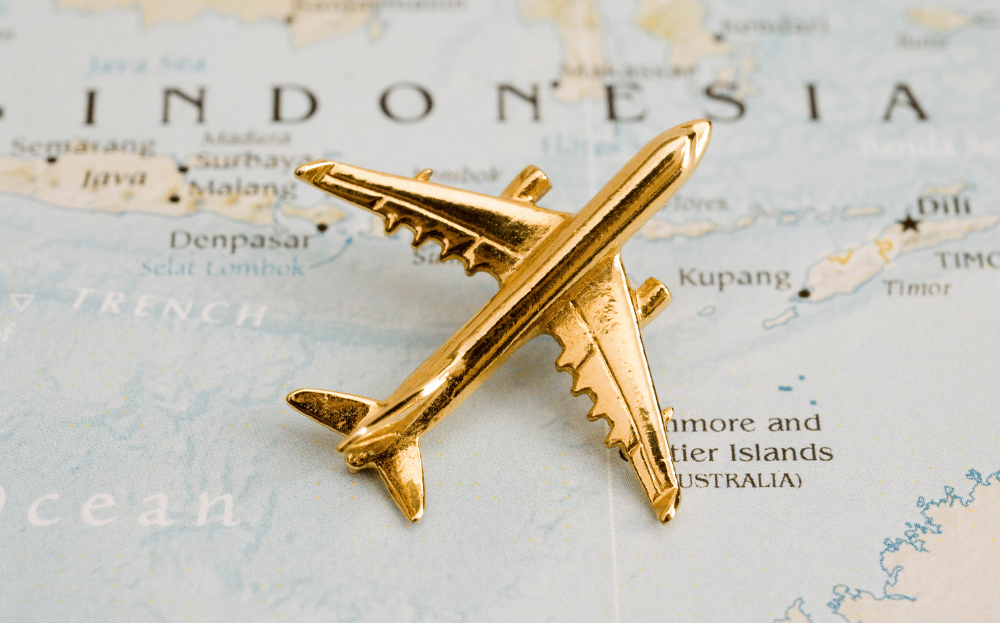
The ultimate milestone of this roadmap is “Indonesia Emas” (Golden Indonesia). The vision is for the country to become the world’s 5th largest economy by 2045. To get there, the government is betting on a “Leapfrog” strategy: rather than following the traditional path of industrialization, Indonesia is attempting to jump straight into the Fourth Industrial Revolution (4.0).
The government is also setting up “Regulatory Sandboxes”—special zones where startups can test disruptive tech like drone deliveries or blockchain-based finance without the immediate burden of traditional laws, fostering an environment where innovation can fail fast and learn faster.