

The Football Agent, The Gatekeeper

How Football Talent from the Periphery Reaches the Top of the World
eyesonindonesia
Amsterdam, April 1st 2026– Modern football is no longer a sport in the traditional sense of the word.
It is a global industry with revenues that surpass those of many mid-sized nations, with intersections in finance, commerce, geopolitics and media rights.
And somewhere at the heart of that ecosystem operates a figure who is simultaneously admired and distrusted: the football agent.
The era of the football agent truly began in 1995 with the Bosman ruling, which gave players the freedom to move clubs at the end of their contracts. Salaries soared as a result, and with them the need for professional representatives who could advocate for players’ interests.
What began as contract management has since grown into a comprehensive service. Today, agents manage not only transfers and contracts, but also their clients’ public relations, media appearances and social media profiles.

The concentration of power in this sector is considerable: the ten largest agencies collectively represent more than a thousand players, with a combined market value estimated at 2.4 billion euros.
That is not merely a business statistic — it is a structural reality that determines who breaks through and who does not.
The Gateway to Europe
For players from wealthier countries with strong football infrastructures, the paths to professional clubs are relatively clear.
But for talent from the periphery, from Suriname, Ghana, Indonesia, Brazil, Belize, the agent is often the only bridge between a dream life and social stagnation.
For young players without a name, the network and personal guidance of an agent are of inestimable value.
That network can make a career. But it can also destroy one. Research shows that each year fifteen thousand young African footballers are taken from their countries under false pretences and end up in Europe or Asia in illegality, at the mercy of agents who make promises they can never keep.
The dark side of the dream factory is as vast as the dream itself.
Suriname: A Nation of World-Class Talent That Was Left Standing at Home
Few countries in the world have, measured by population, made such an extraordinary contribution to the global game as Suriname.
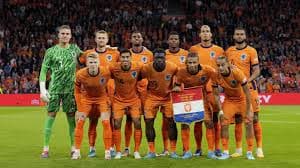
For decades, Suriname produced iron-strong generations of football talent: from Humphrey Mijnals, Ruud Gullit and Frank Rijkaard to Clarence Seedorf, Edgar Davids and Aron Winter, and later Georginio Wijnaldum, Virgil van Dijk and Steven Bergwijn. Bol.com Every single one of them reached the absolute pinnacle of world football. Every single one of them did so after leaving Suriname.
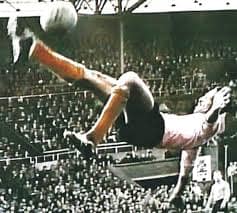
Humphrey Mijnals was, in 1960, the first Surinamese player ever selected for the Dutch national team, and was later named the greatest Surinamese footballer of the twentieth century.
He opened a door that generations after him would walk through.
Clarence Seedorf, born in Paramaribo, grew up in Amsterdam and went on to become the most decorated Dutch club footballer of all time. He won the Champions League four times and became the first footballer in the world to win that tournament with three different clubs.
His estimated net worth stands at a very reasonable place, the result of a career that began in the modest streets of a small Caribbean nation and ended in the palaces of Ajax, Real Madrid and AC Milan.
Ruud Gullit captained the Dutch national team that won the European Championship in 1988. Frank Rijkaard was another key figure of that legendary squad. Together with Marco van Basten, they made AC Milan the dominant European club of their era. Edgar Davids played for Ajax, Juventus, Inter, Milan and Barcelona, a true roll of honour that did justice to his nickname ‘the Pitbull’.
What This Teaches Us
The Surinamese football story is not a story of coincidence. It is a story of talent that was systematically forced to seek its fortune elsewhere, because the domestic market was too small, too disorganised and too poor to nurture it.
The football agent played a crucial role in that, as scout, as facilitator, as gatekeeper.
Yet Suriname itself never benefited: the players all held Dutch passports and could therefore only represent the Netherlands. Only since 2019 have Surinamese professionals with Dutch nationality been permitted to play for their country of birth, a breakthrough that offers genuine hope for a new future for Natio.

The lesson is clear: talent is universally distributed, opportunity is not. As long as the infrastructure for talent development and professional guidance remains unequally spread, the agent in poorer countries will continue to fulfil the role that in wealthier nations is performed by academies, scouting networks and sports institutions.
That makes him indispensable, and equally vulnerable to abuse.
For Suriname, Indonesia, Belize and Brazil, the challenge is the same: invest in the chain before the agent, so that talent no longer has to leave in order to flourish.
eyesonsuriname.com | eyesonindonesia.com | eyesonbrasil.com | eyesonguyana.com | eyesonbelize.com