

Indonesia: The $1.4 Trillion Opportunity That Comes With a Warning Label

BRICS membership, nickel riches, and a 270-million-strong consumer market make Indonesia one of the most compelling investment stories in the world. The corruption problem — and a sovereign fund that spooked rating agencies — make it one of the most complicated.
eyesonindonesia
There is a version of Indonesia that reads like a dream pitch deck for an emerging-market fund. The world’s fourth most populous country, its largest Muslim-majority democracy, and Southeast Asia’s biggest economy is growing at a steady 5% per year, sits astride the most strategically important maritime corridor in the global supply chain, and controls roughly half the world’s nickel reserves — the mineral that happens to be essential to the EV batteries powering the energy transition every government and corporation on earth is scrambling to finance. With a population exceeding 270 million, a rapidly growing digital economy and vast reserves of critical minerals such as nickel, bauxite and tin, Indonesia is central to global supply chains, particularly those linked to the green energy transition.
And then there is the other version. The one where the Corruption Perceptions Index dropped three points in a single year, two major rating agencies revised sovereign debt outlooks to negative, a new sovereign wealth fund with $900 billion in state assets is dominated by the president’s campaign allies, the finance minister who symbolized fiscal discipline was abruptly removed, and the stock market plunged 7% on the day the sovereign fund launched. Both versions are true. That is precisely what makes Indonesia one of the most fascinating — and most demanding — investment destinations on earth in 2026.
The Foundation: Why Investors Can’t Ignore Indonesia
Before examining the risks, the opportunity deserves proper respect. Indonesia is not a frontier market story dressed up in emerging-market clothes. It is a genuine economic heavyweight, with growth expected to remain steady at 5.0% in 2025 and 5.1% in 2026, despite a challenging external environment, reflecting support from fiscal and monetary policies.
Sectors such as e-commerce, manufacturing, tourism, and renewable energy are expanding rapidly to create concrete opportunities for businesses and investors. Indonesia’s e-commerce market is projected to reach USD 160 billion by 2030, driven by rising internet penetration, a young digital-native population, and widespread adoption of digital payments.
But the most strategically significant asset is the one sitting underground. Indonesia has used its nickel dominance not just to export raw materials, but to reshape its entire industrial trajectory. Indonesia has used its vast nickel reserves to push ahead with export bans and industrial policies aimed at building domestic processing capacity — turning resource control into a tool for negotiating better positions in the global green economy. The result is a growing ecosystem of battery-related investment from Korea’s LG, China’s BYD, Vietnam’s VinFast, and Hyundai, all building processing and assembly capacity on Indonesian soil to access the nickel supply they cannot get elsewhere.
The BRICS dimension adds a further layer of strategic weight. On 7 January 2025, Indonesia became the first ASEAN country to formally join BRICS, unlocking new opportunities for trade, infrastructure development and industrial cooperation. In a world of fracturing trade alliances and U.S.-China decoupling, Jakarta’s “polyalignment” — courting investors and partners from all major blocs simultaneously — gives it a unique negotiating position that few emerging economies can claim. In 2024, Indonesia’s trade with BRICS countries totalled around $150 billion, highlighting the bloc’s importance as a key trading partner.
For long-term investors with a 10-year horizon — in infrastructure, renewables, minerals processing, digital services, or consumer goods — the macro case is compelling enough to warrant serious attention regardless of the headline risks.
The Corruption Problem: Deeper Than the Numbers Suggest
And yet. The numbers are hard to dismiss. Indonesia fell 10 places in the annual corruption ranking, landing at 109th out of 182 countries surveyed. Its score dropped from 37 in 2024 to 34 in the first full year of the Prabowo administration — placing Indonesia well below the global average score of 42, on par with countries such as Nepal. Since hitting a score of 40 in 2019, the trajectory has been consistently downward.
Corruption remains endemic in the national and local legislatures, civil service, cabinet, judiciary, and police. The most common offenses are embezzlement, bribery, and extortion. For foreign investors, this is not an abstract problem. It manifests in practical friction: unpredictable licensing delays, contracts that depend on personal relationships rather than competitive merit, and regulatory interpretations that shift according to who is asking.
The Corruption Eradication Commission — known by its Indonesian acronym KPK — was once the most feared institution in Indonesian public life, responsible for a wave of convictions that reached governors, ministers, and even a chief justice. In 2019, parliament passed legislation weakening the KPK, requiring all employees to join the civil service and investigators to be from the National Police. That reform, which critics described as a political neutering operation, has never been reversed. Declining judicial independence has further contributed to Indonesia’s regression, with Transparency International Indonesia tracing the trend back to the 2019 revision of the KPK Law that stripped the agency of its independence.
What is particularly alarming for investors evaluating governance risk is the source of the recent decline. Indonesia Corruption Watch assessed that the Prabowo-Gibran administration over the past year has built an ecosystem that normalizes conflicts of interest, nepotism, and patronage. ICW highlighted the appointment of family members, cronies, and individuals within the President’s inner circle for strategic government positions and concessions in major projects. Among the examples cited: the appointment of Prabowo’s nephew Thomas “Tommy” Djiwandono as a deputy governor of Bank Indonesia — a form of nepotism that has the potential to erode the central bank’s independence from executive influence.
The energy sector is a particular flashpoint. Procurement processes are vulnerable to manipulation, with contracts often going to politically exposed individuals. There are few policies to prevent officials from moving between public office and the private energy sector, and this ‘revolving door’ of personnel exacerbates state capture. For the foreign companies — from Japanese solar developers to European wind turbine manufacturers — hoping to participate in Indonesia’s energy transition, navigating this landscape without a trusted local partner is essentially impossible.
Danantara: The Sovereign Fund That Spooked the Markets
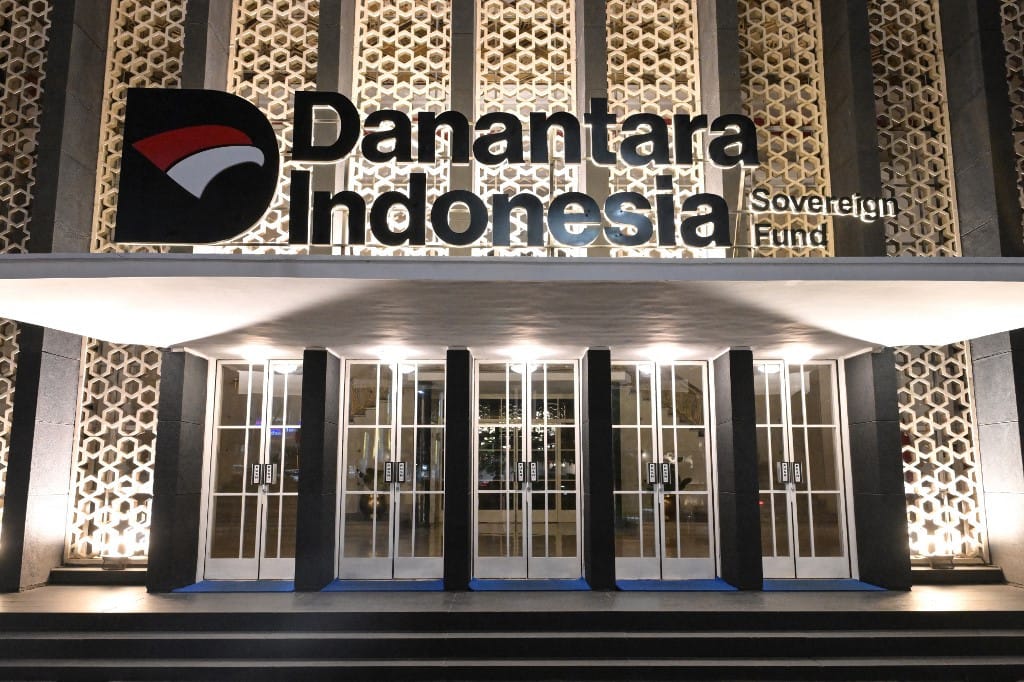
No development in recent Indonesian economic history has concentrated investor anxiety more sharply than the February 2025 launch of Danantara — a sovereign wealth fund conceived on a scale that is either visionary or alarming, depending on one’s confidence in Indonesian institutions.
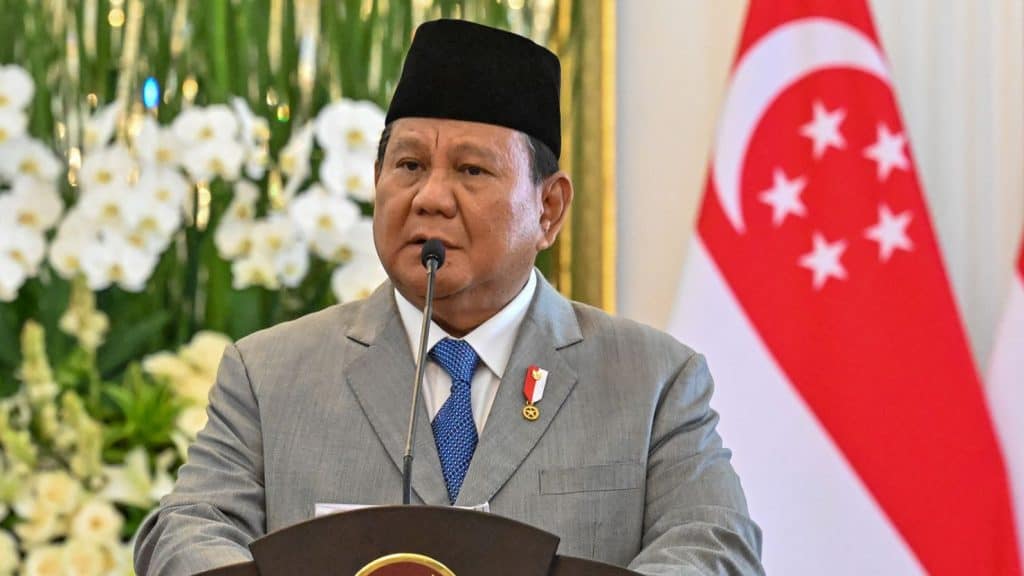
Danantara, which Prabowo launched with an estimated $1 trillion in state assets under its umbrella, was designed with a mandate to optimize returns from Indonesia’s sprawling state-owned enterprises and recycle capital into projects that accelerate national development. The model Prabowo pointed to was Singapore’s Temasek. The reaction in markets was less than flattering: following Danantara’s inauguration, the Jakarta Composite Index dropped 7.1%, driven by continuous foreign capital outflows amounting to approximately US$622.7 million.
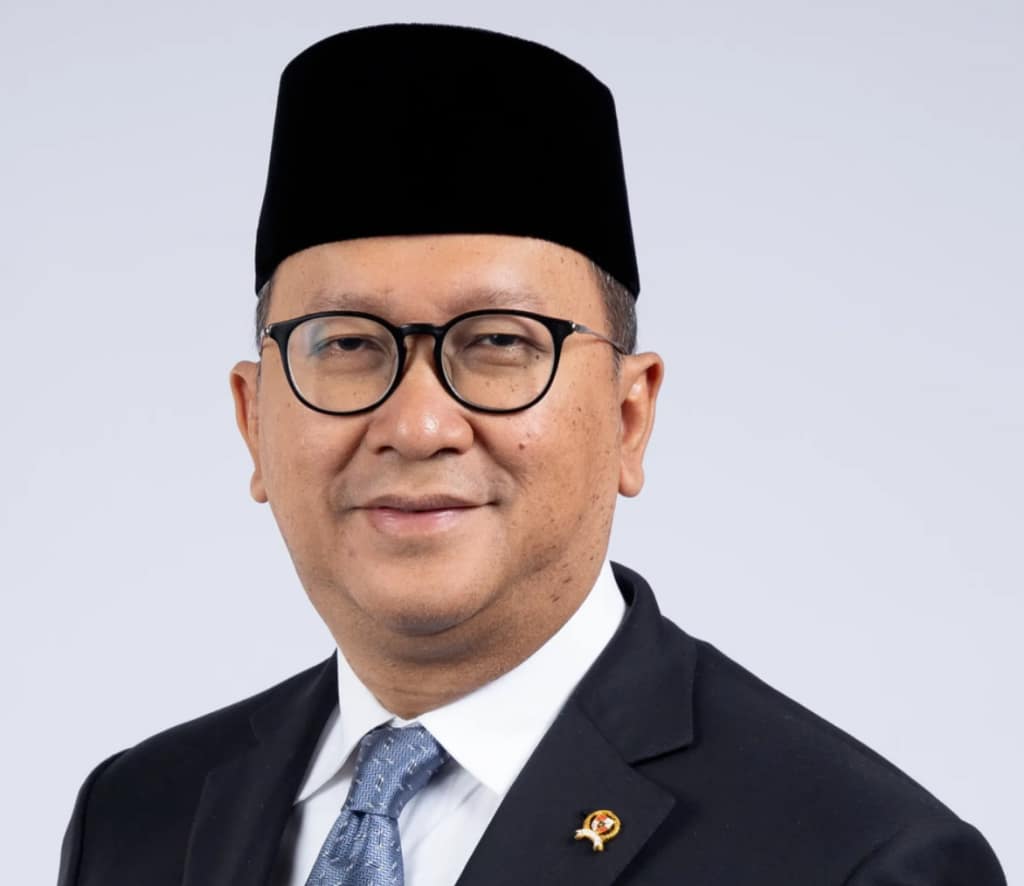
The governance concerns are structural, not speculative. Danantara’s structural design increases the risk of political influence due to regulatory loopholes and cronyism. Figures with close political affiliations to President Prabowo dominate its board. Danantara CEO Rosan Perkasa Roeslani is Prabowo’s former lead campaigner and is now the Indonesian Minister of Investment and Downstream Industry — overlapping roles that pose significant risks related to conflicts of interest and regulatory capture. Indonesia Corruption Watch has identified at least 24 of the 31 individuals in Danantara’s organizational structure as Politically Exposed Persons — current or former holders of public office or individuals with significant power or influence — considered more vulnerable to involvement in illicit activities.
The credit implications have been swift and concrete. Moody’s Ratings and Fitch Ratings cited Danantara as among the factors that drove their decisions to cut Indonesia’s sovereign credit outlooks from stable to negative. “Insufficient policy coordination and cohesiveness around Danantara’s mandate raise risks to policy credibility and potential contingent liabilities for the sovereign,” Moody’s wrote.
Indonesia’s hard-won fiscal credibility is being tested as off-budget spending, new state financial institutions, and Prabowo’s ambitious spending agenda blur the once-clear boundaries of fiscal policy. The removal of Sri Mulyani Indrawati — a finance minister who served three presidents and was widely regarded by foreign investors as the guarantor of Indonesian fiscal discipline — has made the situation more precarious. Her replacement was more aggressive on spending, tapping some $12 billion of the country’s reserves to recapitalize state-owned banks and pledging to use more than half of the government’s “rainy day” fund by the end of 2025.
The Geopolitical Tightrope: A Feature and a Bug
Indonesia’s famous non-alignment — what analysts now call “polyalignment” — is simultaneously its greatest geopolitical asset and a source of investor uncertainty. By refusing to choose sides between Washington and Beijing, Jakarta has positioned itself as a supplier to everyone, a partner to all, and a strategic dependent of none.
The practical consequences of this posture are mixed. In the U.S., the Inflation Reduction Act offers tax credits to battery and EV firms, but to be eligible, a ‘foreign entity of concern’ cannot hold 25% or more of board seats, voting rights, or equity in an EV supply chain entity — which will exclude Indonesia from the American subsidy ecosystem given the deep Chinese investment in its processing industry. Washington is actively working with Japan to develop alternative “green” nickel refineries in the Philippines instead. European investors face their own complications around Indonesia’s coal-heavy power grid and the environmental standards embedded in the Mercosur-EU-style frameworks they are required to meet.
Meanwhile, BRICS membership offers access to new financing channels and trading relationships — the New Development Bank, reduced dollar dependency in bilateral settlements, and deeper ties with China and India — but it also raises questions in Western boardrooms about alignment and political risk. For a company based in Frankfurt or Toronto, co-investing with a sovereign fund that answers directly to the president and is staffed by his campaign allies — and that holds its assets through the BRICS payment system — requires a level of due diligence that most investment committees are simply not equipped to perform.
What the Prudent Investor Should Do
None of this means Indonesia should be avoided. It means it should be approached with eyes fully open and strategy carefully calibrated.
The sectors that offer the most compelling risk-adjusted returns are those where Indonesia’s structural advantages are irreplaceable — principally critical minerals and the downstream battery materials ecosystem, digital financial services (where regulation is evolving but the market is enormous), infrastructure logistics in the archipelago, and consumer-facing industries serving the rapidly expanding urban middle class.
Young demographics, a fast-growing digital economy, strong domestic demand, and abundant natural resources are major selling points. These fundamentals have not changed. What has changed is the governance environment surrounding them, and investors who price that risk properly — through joint ventures with credible local partners, investment structures that minimize regulatory capture risk, and contractual provisions that align with Indonesia’s improving but still developing arbitration framework — can still access the opportunity.
The sectors to approach with particular caution are those most exposed to Danantara’s reach: state-owned enterprises being restructured under the fund’s umbrella, energy concessions in the coal-to-renewables transition zone where the revolving door between political office and private contracts operates most freely, and any greenfield project that depends on a government-granted monopoly or a single regulatory approver for its commercial viability.
Investors have expressed that “they need stronger, more credible, more transparent institutions to commit capital to the Indonesian market” and that they “don’t always understand how the political system works, the role of the domestic development finance institution, the involvement of state-owned banks in transactions.” That honest assessment from investors already in the market deserves to be taken seriously by those still deciding whether to enter.
The Bottom Line
Indonesia in 2026 presents foreign investors with a genuinely difficult calculation. The opportunity is real, large, and — in certain sectors — structurally irreplaceable. The governance risks are also real, worsening on measurable indicators, and concentrated in precisely the state-directed institutions that the Prabowo government is betting on to drive its most ambitious growth agenda.
At the Indonesia Economic Outlook 2026 forum, President Prabowo introduced “The New Indonesia” as a renewed commitment to ensure that corruption would no longer be tolerated. The rhetoric is sincere enough. The institutional trajectory, as measured by independent observers from Transparency International to Moody’s, points in the other direction.
Brazil’s experience — where independent institutions like the Central Bank and the Federal Police proved more durable than any individual politician’s promise — offers a useful lesson. In Indonesia, the KPK’s independence has been legally weakened, the judiciary’s autonomy is under pressure, and the new sovereign fund concentrates economic decision-making in the hands of people with overlapping political and commercial interests. The question for every foreign investor is not whether Indonesia is worth engaging with — it clearly is. The question is whether the specific deal, contract, or sector they are considering depends on those institutions holding firm, or whether it can be structured to succeed regardless.
The smart money knows the difference. And in Indonesia, making that distinction correctly could be the most valuable investment decision of the decade.