

The Great Green Shift

Why Indonesia is Betting on the “Forever” Fund Over Carbon Credits
eyesonindonesia
For decades, Indonesia’s vast rainforests—the lungs of Southeast Asia—have been a central battleground for climate finance. The primary tool of choice has been REDD+ (Reducing Emissions from Deforestation and Forest Degradation), a system of carbon credits that pays countries to stop destroying trees.
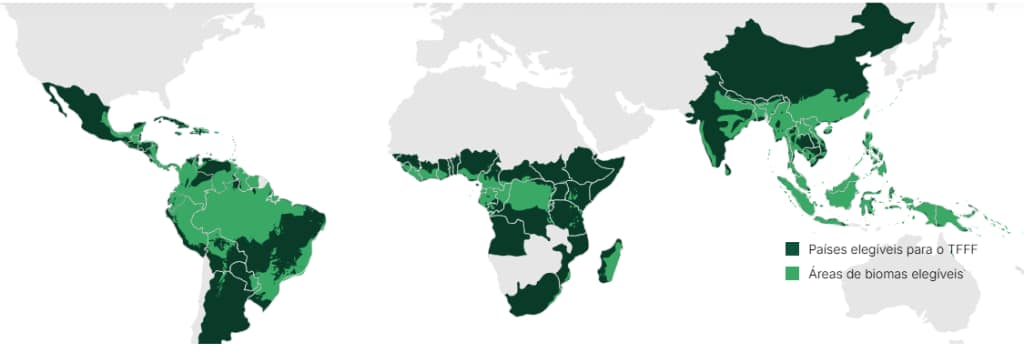
But at COP30 in Belém, Brazil, a new contender took center stage: the Tropical Forest Forever Facility (TFFF). While carbon credits are about “fixing a mistake,” the TFFF is about “valuing a status quo.” For Indonesia, this isn’t just a technical change; it’s a total reimagining of how its nature is priced.
1. Standing Still vs. Slowing Down
The most radical difference lies in the metric of success.
- REDD+ (The Carbon Flow): Think of this as a “speeding ticket” in reverse. You get paid if you were going 100 mph (high deforestation) and slowed down to 50 mph. If you were already parked safely (pristine forest), you often got nothing because there was no “avoided” damage to measure.
- TFFF (The Forest Stock): This is more like a landlord’s rent. Indonesia gets paid a fixed rate—roughly $4 per hectare—simply for keeping the forest there. It doesn’t matter if the forest was at risk or not; the value is in its existence.
2. Market Whims vs. Global Endowment
Where the money comes from is the second big divide.
- Carbon Credits are sold on the volatile voluntary carbon market. Prices can crash if a scandal hits or if demand from corporate “polluters” drops.
- The TFFF is designed as a $125 billion endowment fund. It collects capital from sovereign wealth funds and private investors, invests that money in global markets, and uses the interest to pay forest nations. For Jakarta, this offers a level of budgetary predictability that the “wild west” of carbon credits never could.
3. Decoupling from “Greenwashing”

Liane Schalatek and other critics often point to the ethical murky waters of carbon credits. In the REDD+ model, a credit is usually bought by a company (like an airline or oil giant) to “offset” their own pollution.
The TFFF decouples forest protection from pollution. Investors in the TFFF receive a small, steady financial return from the fund’s investments, not a “license to pollute.” This allows Indonesia to protect its forests without being part of a corporate accounting trick—a major win for national “green” branding.
The Big Trade-Off: The 0.5% Rule
If the TFFF sounds too good to be true, it comes with a “poison pill” that has experts like Schalatek worried. To receive payments, a country must keep its annual deforestation rate below 0.5%.
For Indonesia, this is a high-stakes gamble. If a surge in nickel mining or palm oil prices causes a spike in clearing, the country could lose 100% of its TFFF funding for that year. Unlike REDD+, where you simply earn fewer credits if you do worse, the TFFF is “all or nothing.”
Conclusion: A Hybrid Future?
Indonesia isn’t abandoning REDD+ just yet. Instead, Jakarta is looking at a “layering” strategy:
- Use the TFFF as a base salary for its vast, intact interior forests.
- Use REDD+ carbon credits as a “performance bonus” for specific restoration projects in degraded peatlands.
By joining the TFFF at COP30, Indonesia is betting that the world is finally ready to pay for forests simply because they exist—not just because we’re afraid of losing them.