

Lighting the Archipelago

Indonesia’s Clean Energy Entrepreneurs Are Building the Future One Island at a Time
eyesonindonesia
Jakarta / Lampung / Sumbawa / Eastern Indonesia — Indonesia is a country defined by its geography. Seventeen thousand islands, 270 million people, and an energy grid that has always struggled to keep pace with both. For decades, the answer to powering remote communities was the diesel generator — expensive, polluting, and dependent on supply chains that stretch across vast stretches of ocean. Today, a generation of entrepreneurs, engineers, and social innovators is building something different: a clean energy future designed not from the centre outward, but from the edges in.
Indonesia launched its National Roadmap for Hydrogen and Ammonia in June 2025, outlining 215 action plans across regulatory, infrastructure, and export development phases, targeting 4.2 million tons of hydrogen consumption annually for power generation and expecting to create 300,000 jobs and generate USD 70 billion in revenue. The ambition is staggering. And it is being met not just by state-owned energy giants, but by startups founded in university labs, village cooperatives, and spare bedrooms across one of the world’s most challenging and most promising energy markets. These are some of the people and companies driving the change.
Pertamina Geothermal Energy: Tapping the Earth’s Own Heat
The most dramatic innovation in Indonesian green hydrogen in 2025 did not come from a coastal wind farm or a vast solar array. It came from beneath the volcanic earth of Lampung province in southern Sumatra, where steam has been hissing from the ground for centuries.
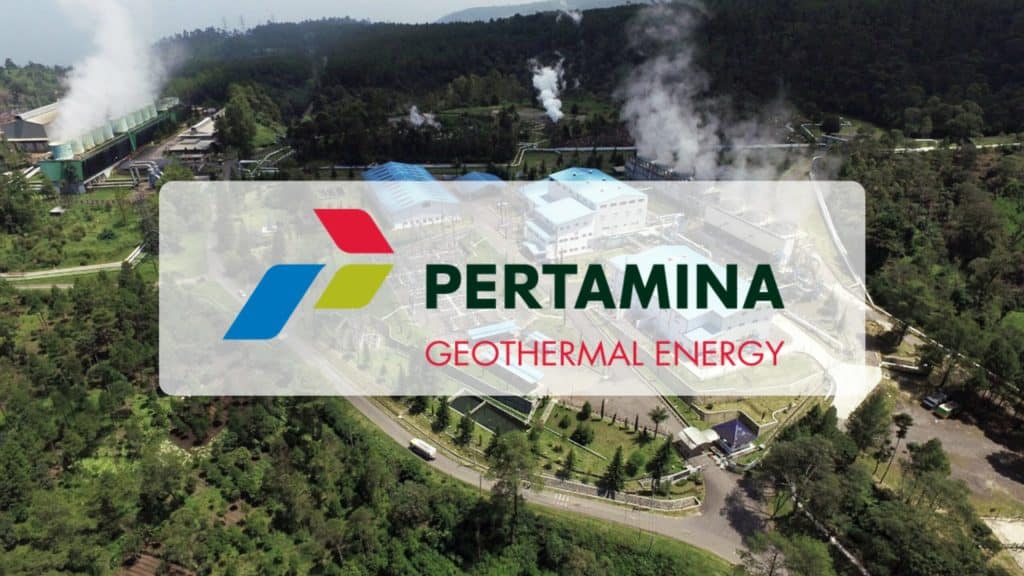
On September 9, 2025, PT Pertamina Geothermal Energy (PGE) — a subsidiary of state-owned PT Pertamina — broke ground on an innovative green hydrogen pilot plant at the Ulubelu geothermal site in Lampung, pairing renewable geothermal energy with a cutting-edge Anion Exchange Membrane (AEM) electrolyzer in what its developers describe as the first project of its kind in the world.
The concept is elegant in its simplicity. Ulubelu’s geothermal power plant already generates reliable, round-the-clock clean electricity from underground heat — electricity that does not depend on sunlight or wind and therefore never fluctuates. The pilot facility is targeted to produce up to 100 kilograms of green hydrogen per day at an efficiency of 82–88% using modern AEM membrane electrolysis technology, which is more environmentally friendly and energy-efficient than conventional electrolysis systems.
The investment of around USD 3 million is expected to see the facility operational by the end of 2026, with about 80% of the green hydrogen produced earmarked to support low-carbon energy needs at the Tanjung Sekong LPG terminal in Banten — a terminal that supplies 35–40% of Indonesia’s LPG needs, making it a strategic site to evaluate real-world decarbonization impact.
PGE’s president director Julfi Hadi frames the project as far more than a pilot plant. “This groundbreaking is the first step for PGE to build an integrated green business chain from upstream to downstream. This facility is not only an innovation center but also a model that can be replicated in other geothermal working areas, while also opening up opportunities to accelerate off-grid solutions for transportation and low-carbon industries,” he said at the launch. The long-term roadmap explicitly includes green ammonia and green methanol as next steps — transforming Ulubelu from a power generator into the anchor of an entirely new industrial value chain.
Indonesia sits on the world’s largest geothermal resource — an estimated 40% of the planet’s total — and the Ulubelu model, if it proves commercially viable, could replicate itself across PGE’s other 15 geothermal working areas. The implications for clean hydrogen production, untethered from weather variability, are profound.
HDF Energy Indonesia: Powering the Islands That Diesel Built
Imagine living on an island so remote that your electricity comes from a diesel generator that rumbles to a stop at ten in the evening. This is the daily reality for millions of Indonesians in the eastern archipelago — in East Nusa Tenggara, in Papua, in Maluku — where islands are too scattered and too small to justify connecting to the national grid. The diesel that powers their lights, their hospitals, their schools, arrives by boat, at enormous cost and carbon expense.
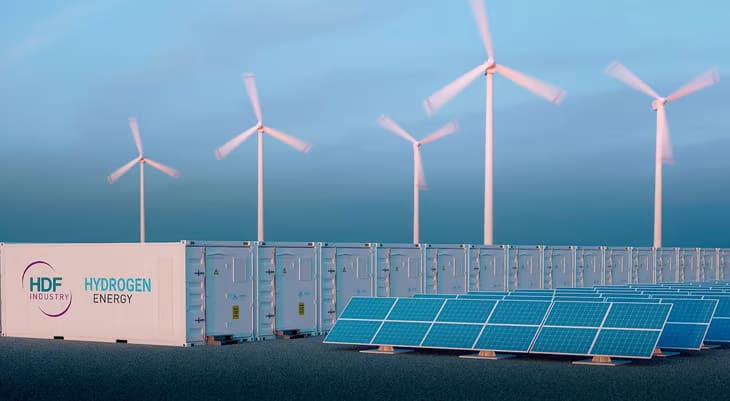
French hydrogen company HDF Energy arrived in Indonesia with a solution it calls Renewstable® — and it has been developing it with a speed and scale that few observers anticipated. HDF Energy is currently developing 23 Renewstable® hydrogen power plants in Eastern Indonesia, representing a potential investment of USD 2.3 billion. These facilities combine a solar park with substantial on-site energy storage in the form of green hydrogen to provide non-intermittent, stable and 100% clean electricity to the grid, day and night.
The technology solves the fundamental problem of solar power on remote islands: its intermittency. During the day, Renewstable® plants generate surplus solar electricity, using the excess to split water into hydrogen. At night, those fuel cells convert the stored hydrogen back into electricity, delivering power continuously. The result is firm, stable, and dispatchable power — with no intermittency risk — that can address the challenges in Eastern Indonesia where communities heavily rely on diesel power generation.
HDF signed two strategic agreements in June 2025, in the presence of French President Emmanuel Macron and Indonesian President Prabowo Subianto — a tripartite MoU with PLN and state-owned infrastructure financier PT SMI to unlock innovative financial mechanisms for the 23 projects, and a separate agreement with the provincial government of East Nusa Tenggara, where eight of the projects are located.
The ambition does not stop at power generation. In October 2025, HDF, partners from NEUMAN & ESSER South East Asia, and GIZ signed a further agreement to study the use of green hydrogen to power inter-island ferries — tapping the surplus hydrogen from Renewstable® plants to decarbonize Indonesia’s maritime transport sector, which is the lifeblood of connectivity across the archipelago.
Mathieu Geze, HDF’s Director for Asia Pacific and President Director of PT HDF Energy Indonesia, has described his company’s goal plainly: to position Indonesia as a leader in green hydrogen innovation in the Asia-Pacific. For the villagers of Sumba and South Papua who currently live by the rhythm of a diesel tank, that goal has a very immediate human meaning.
Xurya: The Solar Company That Refused to Take No for an Answer
Not every clean energy revolution begins with billions of dollars and presidential MoUs. Sometimes it begins with a conversation between two university friends who spent a decade waiting for the right moment to act.
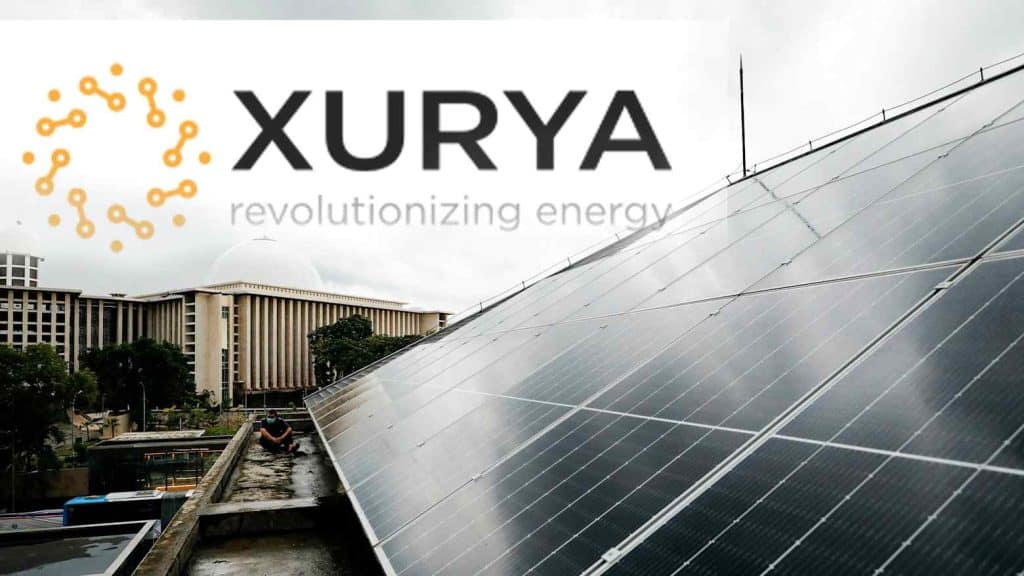
Founded in 2018 by Eka Himawan, Edwin Widjonarko, and Philip Effendy, Xurya has become a role model in Indonesia’s solar energy industry. The idea of launching a renewable energy company had been on Eka and Edwin’s minds since 2007. Both had backgrounds in the solar energy sector — Eka was working at a hedge fund investing in solar technology, while Edwin was a researcher specialising in solar panels.
They waited, watched the market, and launched Xurya when they believed Indonesia was finally ready. The problem they encountered was immediate and stubborn: businesses viewed solar panels as expensive, alien technology. In 2018, market awareness was low; many businesses viewed solar panels as expensive “alien technology” and prioritised conventional electricity for industrial use. Instead of retreating, Xurya focused on educating the market and highlighting the financial benefits of their rental model.
That rental model — what they called zero investment solar — was the breakthrough. Xurya was the first Indonesian company to offer rooftop solar rental without initial cost, which helped spur the rapid growth of rooftop solar adoption in the commercial and industrial sector. Instead of asking factories, logistics centres, and shopping malls to pay upfront for panels, Xurya installed them at no charge and recovered costs through energy savings. The pitch was simple: switch to solar, pay nothing today, save money immediately.
Today, Xurya’s projects generate approximately 164 million kWh of clean energy annually — equivalent to a reduction of over 146,000 tons of CO₂ per year — across nearly 200 projects totalling over 100 MW of solar capacity. Clients range from Traveloka to Tokopedia to Mitsubishi Chemical’s Indonesian manufacturing arm. Xurya was also the first Indonesian company to use the Internet of Things for remote solar operations, and has since incorporated machine learning into solar management.
The company has attracted backing from the Norwegian Climate Investment Fund, Swedfund of Sweden, and British International Investment — the UK’s development finance institution — in its landmark 2024 funding round, raising over $110 million in total across five rounds.
Eka’s framing of the challenge is instructive for anyone tempted to see climate action as burden rather than opportunity: “There’s a huge opportunity here. A lot of people say climate change is the challenge of a lifetime — but I like to think of it as the chance of a lifetime. Instead of seeing it as climate change, see it as a climate chance.”
Energi Timur Nusa Power: Smart Rivers for Remote Villages
Head east from Bali, past Lombok, past Sumbawa, and you reach a string of islands where rivers tumble down volcanic slopes and micro-hydro power plants have been spinning for decades — often badly. The plants were built with good intentions but inadequate technology: manual controls, limited monitoring, and no way to adapt dynamically as water levels rose and fell or electricity demand shifted through the day.
Energi Timur Nusa Power is a renewable energy technology startup from Sumbawa, West Nusa Tenggara, focused on improving the performance of micro-hydro power plants in remote villages. Many of these plants operate below capacity due to manual systems and limited infrastructure. The startup has introduced a smart control system that automatically adjusts to changes in water flow and electricity demand, ensuring energy supply is more reliable, stable, and efficient.
The innovation is not glamorous by the standards of hydrogen electrolyzers or urban eVTOLs. But for a village in Sumbawa where lights flicker unpredictably, where children cannot study after dark without reliable power, and where small businesses cannot plan around an energy supply that fails without notice, an automatically stabilised micro-hydro plant is transformative.
Energi Timur Nusa Power was selected by the KINETIK NEX program — a clean energy startup incubator backed by New Energy Nexus — for funding and mentorship, alongside a cohort of equally determined Indonesian clean energy ventures. The company’s ambition is to replicate its smart control technology across dozens of underperforming micro-hydro plants in eastern Indonesia, turning malfunctioning assets into reliable community power sources without the need to build anything new.
GAWIREA: Teaching Papua’s Women to Process Sago by Sunlight
The most quietly radical clean energy project in Indonesia may not involve hydrogen or solar megawatts at all. It involves sago — the starchy palm tree staple that has fed communities in Papua for millennia — and a group of women being taught to process it using solar power.
GAWIREA (Girls and Women in Renewable Energy Academy) teaches rural women and girls about renewable energy and entrepreneurship. One of GAWIREA’s initiatives is Wani Yinio, which trains women in Papua in solar-powered sago processing. Solar-powered sago processing cuts fossil fuel use, improves local food security, and helps women gain skills and income. GAWIREA gives women practical training to use clean energy like solar and biomass, helping them earn more, support their communities, and adapt to climate change.
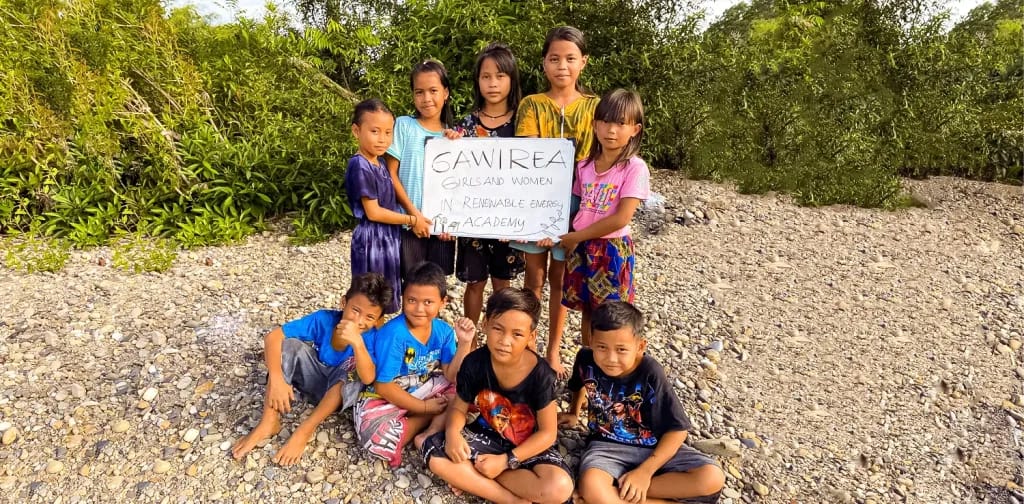
The bioeconomy dimension is inseparable from the social one. Sago palms absorb carbon and grow in the swampy lowlands of Papua where little else thrives. Processing sago traditionally requires diesel or firewood; replacing those energy sources with solar not only cuts emissions but reduces costs and health risks from smoke inhalation. And doing so while training women as energy entrepreneurs creates a multiplier effect that extends far beyond any single village or kilowatt.
GAWIREA plans to expand the Wani Yinio model across Papua, making sago a symbol of sustainable food and women’s empowerment in the clean energy transition.
The Bigger Picture: An Archipelago in Transition
These stories — from Lampung’s steam vents to Sumbawa’s rivers to Papua’s sago groves — share a common thread. Indonesia’s clean energy transition is not happening in a single direction, from a single source, toward a single model. It is happening in seventeen thousand directions simultaneously, driven by entrepreneurs who understand that the scale of the challenge is matched only by the scale of the opportunity.
Indonesia has developed a structured and phased roadmap to transition from fossil fuel-based hydrogen production to a clean hydrogen economy, aligning with its net zero emissions target by 2060 — with the period between 2025 and 2030 focused on laying the groundwork through research, pilot projects, regulatory frameworks, and building infrastructure and human resources.
The pilots are now live. The startups are funded. The agreements are signed. And on islands that have run on diesel for generations, the lights are beginning to stay on after dark — powered not by fossil fuel delivered by boat, but by sun, steam, river water, and the ingenuity of the people who live there.
Reporting based on sources including Pertamina Geothermal Energy, HDF Energy, New Energy Nexus / KINETIK NEX, East Ventures, British International Investment, Fuel Cells Works, Offshore Energy, Hydrogen Fuel News, and SolarQuarter.