


A Day in the Life: IKN Nusantara, 2030

The AI-Native Human Experience
eyesonindonesia
Welcome to IKN Nusantara, 2030. Our citizen today is Anya, a 32-year-old urban planner specializing in climate resilience, who lives in one of the “Forest City” districts. Her day is not just smart; it’s seamlessly integrated, powered by an invisible layer of AI and robotics.
6:30 AM: Wake-Up & Wellness
Anya’s bedroom lights gently brighten, synchronized with her sleep cycle data from her wearable. Her AI home assistant (“Nusantara Voice”) confirms her first meeting is at 9:00 AM, and suggests a 30-minute forest walk to improve her “Nature Immersion Score” before a light rain is expected around 8:30 AM. Her smart fridge has already prepped a personalized breakfast smoothie based on her nutritional needs and inventory.
7:00 AM: Forest Immersion & Eco-Commute
Anya steps out of her apartment, which blends into the surrounding vertical forest. The air is crisp, purified by the extensive green infrastructure. Instead of car sounds, she hears birdsong and the soft whir of automated maintenance bots pruning vertical gardens.
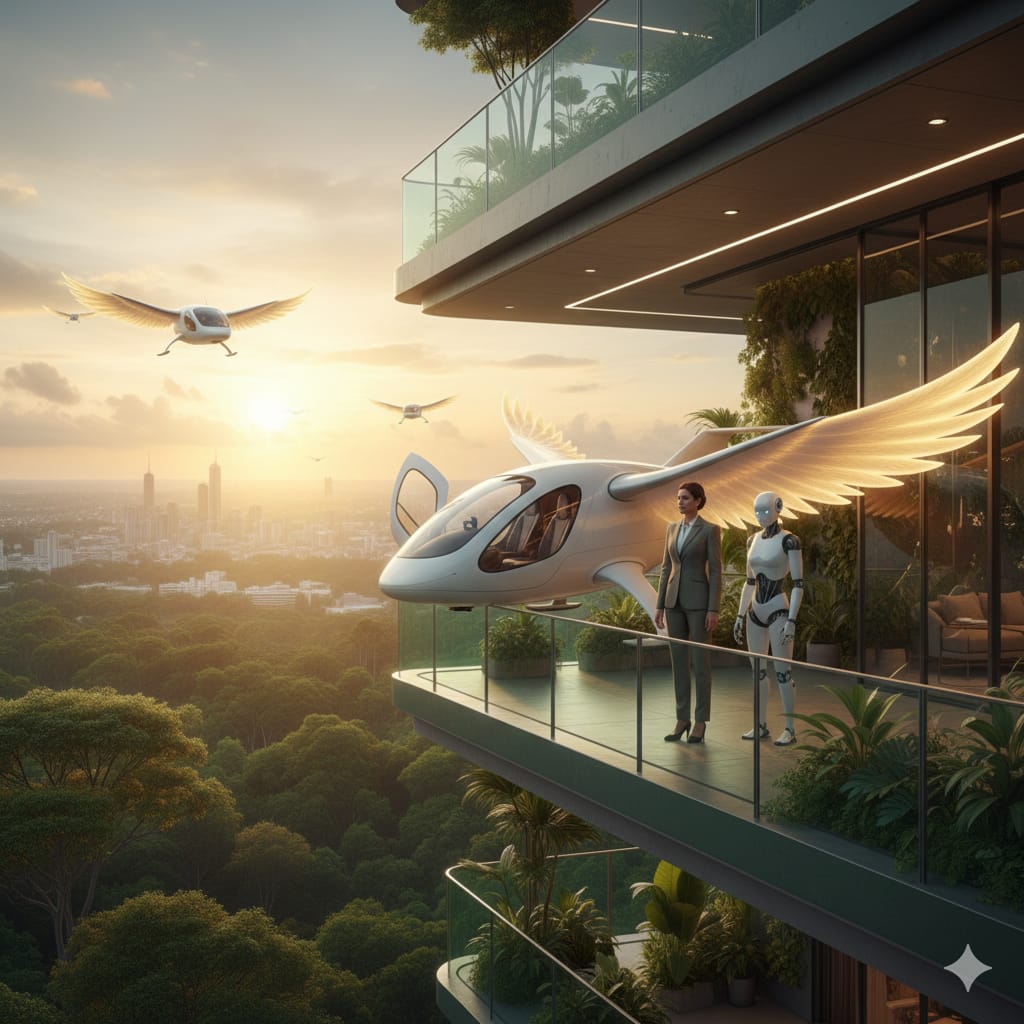
She ambles to the nearest Mobility Hub, a beautifully designed structure that integrates with the natural landscape. Her personal AI has already booked her an autonomous electric pod. As she scans her palm (biometric ID), a pod glides open, perfectly timed. The ride is silent, offering panoramic views as it navigates the dedicated EV lanes, powered by the city’s smart grid which is currently running on 100% solar and hydro.
8:15 AM: Arrival at the “Cognitive Government” Hub
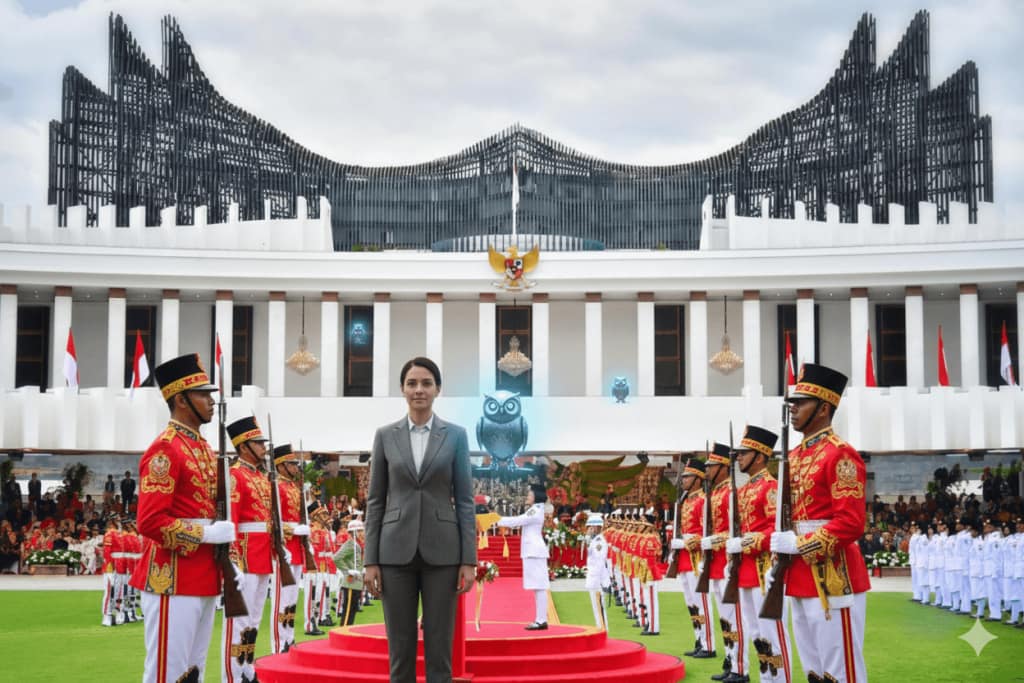
Anya arrives at the “Smart Government” district. Her pod drops her directly at the building’s entrance. There are no security checkpoints or turnstiles; facial recognition handles access seamlessly.
9:00 AM: AI-Assisted Planning & Collaboration
Her meeting is about a new coastal resilience project. The meeting room is equipped with AI-powered holographic displays. Instead of endless spreadsheets, a 3D simulation of the coastline, complete with predictive flood models and drone-collected environmental data, hovers in the center of the table.
Anya’s personal AI is integrated with the project management system. It proactively highlights potential regulatory bottlenecks (based on AI analysis of historical permits), suggests optimized material sourcing from local sustainable suppliers, and even drafts a summary of the meeting’s key action points in real-time.
12:30 PM: Hyper-Personalized Lunch
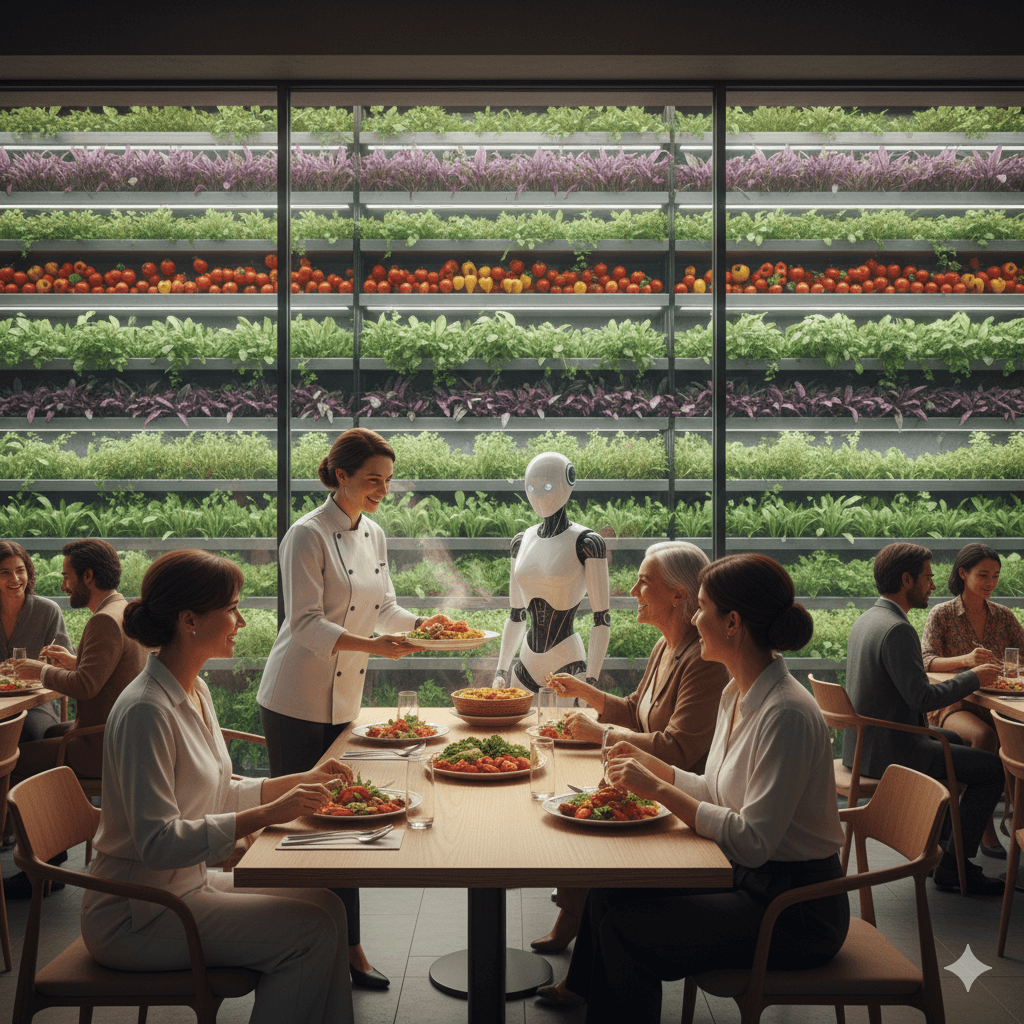
For lunch, Anya heads to a “Food Hub” near her office. Her smart health profile, which anonymously shares her dietary preferences and any current health goals, has already suggested a few optimal choices. She picks a local “warung” (food stall) that uses AI-optimized vertical farming to grow fresh produce within the city. Her payment is frictionless via her biometric ID.
2:00 PM: Remote Site Monitoring via Drone Robotics
Anya needs to inspect a new mangrove restoration site on the city’s periphery. Instead of a long commute, she uses a “Digital Twin” interface in her office. She pilots (or rather, directs) a semi-autonomous drone equipped with hyperspectral cameras. The drone, guided by AI, surveys the area, highlights areas of concern (like potential erosion or invasive species), and collects data for real-time adjustments to the restoration plan.
5:00 PM: Community & Wellness

After work, Anya’s AI suggests a session at the nearby “Community Fitness Pod,” a modular gym powered by sustainable energy. Her workout routine is dynamically adjusted by AI based on her energy levels and recovery data.
Later, she meets friends at a local park, designed with AI-managed biophilic lighting that adjusts to human presence and natural light cycles, enhancing both safety and ecological integration. Autonomous service robots quietly collect waste, ensuring the park remains pristine.
8:00 PM: Smart Home, Seamless Evening
Back home, Nusantara Voice has adjusted the ambient lighting and temperature to her preferences, having learned her evening routine. She orders groceries via her home hub, which are delivered by an autonomous delivery bot within the hour, having sourced ingredients from the nearest smart micro-farm.
As Anya winds down, she reflects on a day where technology didn’t just assist her; it blended into the environment, allowing her to focus on her work, her well-being, and her connection to the vibrant, living city around her. In IKN, the “AI-first” approach means technology truly serves human and environmental harmony.