



Belize vs. Brazil

Where Should Your Capital Go?
INVESTMENT INTELLIGENCE • MAY 2026
eyesonbelize
A definitive comparison of property ownership, taxation, and safety for foreign investors deciding between two of the most exciting destinations in the Americas.
Both Belize and Brazil promise sun, beaches, and investment returns that make European and North American markets look pedestrian. But they are fundamentally different animals. One is a small, English-speaking, common-law nation with a dollar-pegged currency and no capital gains tax. The other is a continent-scale economic powerhouse with 7,000 kilometres of coastline, a complex civil law system, and a tax code that requires a specialist to navigate. This guide cuts through the noise and gives you the information that actually matters before you write a cheque.
| 8.2% Belize GDP Growth 2024 | 1.8% Brazil GDP Growth 2024 | 0% Belize Capital Gains Tax | 15–22.5% Brazil Capital Gains Tax |
SETTING THE STAGE
Two Countries, Two Investment Philosophies
Comparing Belize and Brazil for real estate investment is a little like comparing a boutique private bank to a major stock exchange. One offers simplicity, predictability, and a very personal experience. The other offers scale, depth, and the potential for outsized returns — alongside greater complexity and higher stakes if things go wrong.
Belize is tiny. With a population of around 450,000 and a GDP of $3.6 billion, it punches far above its weight class in terms of investor-friendliness. Its British colonial legacy produced a legal system that American and European investors understand immediately: English contracts, fee-simple property titles, common law courts, and the UK Privy Council as a final appeal backstop. Brazil is the tenth-largest economy in the world, a BRICS founding member with 215 million people, a diversified industrial base, and a real estate market valued in the hundreds of billions. Its scale is its greatest asset and its greatest complexity.
For the foreign investor, the central question is not which country is ‘better’ — it is which country is right for your capital, your risk tolerance, and your investment horizon. This guide answers that question across the three dimensions that matter most: property ownership rules, tax obligations, and personal safety.
CHAPTER 1
Buying Property as a Foreigner
Belize: Open Doors, Simple Title
Belize operates one of the most welcoming foreign ownership regimes in the entire Western Hemisphere. There are no restrictions whatsoever on foreign nationals purchasing urban or coastal residential and commercial property. Non-citizens enjoy identical property rights to Belizean nationals — a constitutional protection, not merely a policy preference. Transactions are conducted in English, under British common law, using a fee-simple title system that North American and European investors will find entirely familiar. Title insurance and escrow arrangements work in exactly the way you would expect.
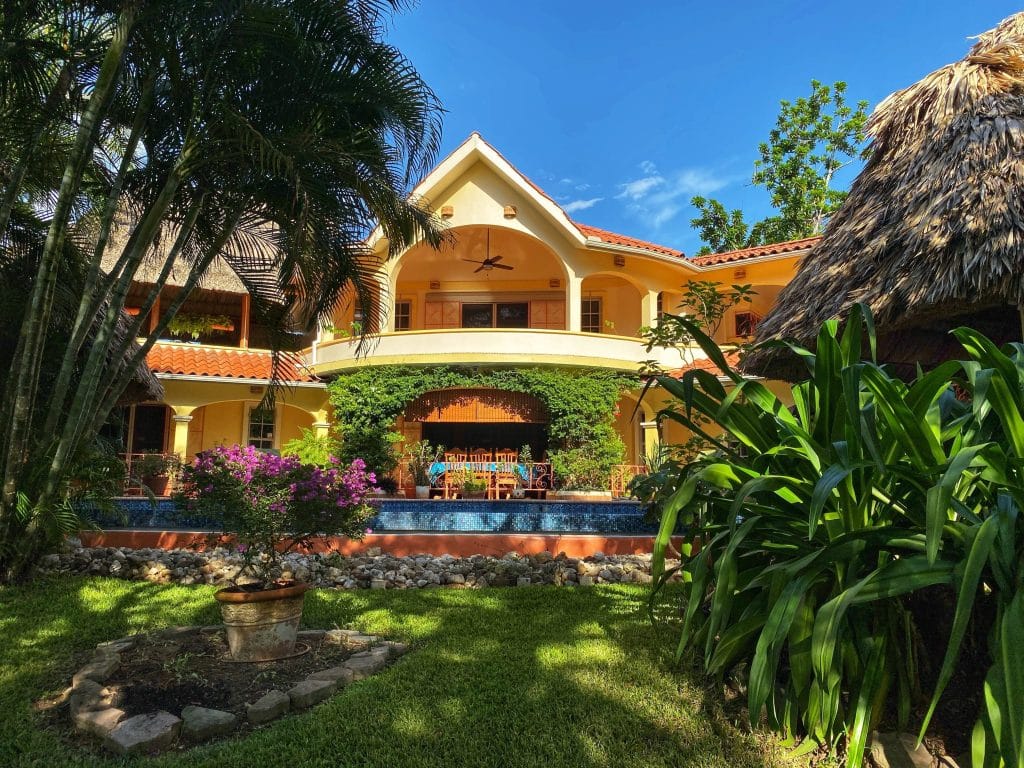
The process itself is relatively streamlined. There is no requirement for a foreign tax identification equivalent, no mandatory registration with a central bank, and no cap on the amount or number of properties a foreigner can own. A typical residential purchase can be completed in a matter of weeks with a qualified local attorney.
| BELIZE QUICK RULE Foreigners own urban and coastal property with full fee-simple title, no restrictions, no caps, no mandatory government registration. Rural land purchases are equally open, though a standard due-diligence process applies. The Qualified Retired Persons (QRP) programme offers additional benefits for long-term foreign residents. |
Brazil: Possible, but Layered with Complexity
Brazil also allows foreign nationals to purchase real estate — and urban residential and commercial property can be acquired without specific ownership restrictions, provided the buyer obtains a CPF number (Brazil’s individual taxpayer ID). That is where the simplicity ends.
Rural land is subject to Federal Law No. 5,709/1971, which imposes a complex web of restrictions. Foreign nationals cannot own rural properties larger than 50 fiscal modules. Foreign ownership in any municipality may not exceed 25% of total area, with no more than 40% held by nationals of a single country. Properties in border zones require prior authorisation from the National Defence Council. Properties near coastlines may be subject to additional environmental or defence restrictions. Companies with foreign majority ownership are treated as foreign nationals for these purposes — meaning structures that appear domestic on the surface may still trigger rural ownership rules.
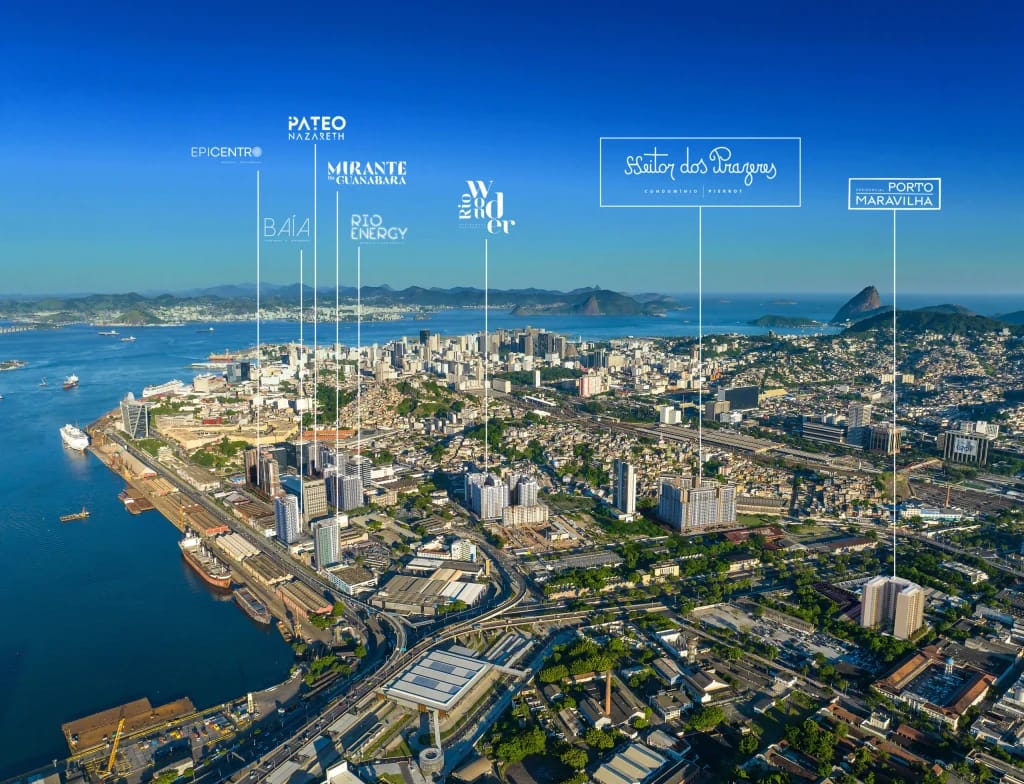
Even for urban purchases, the process is meaningfully more complex than in Belize. International money transfers to Brazil are tightly regulated by the Central Bank; improper procedures can freeze funds for months. The registry system is decentralised — each municipality maintains its own Land Registry Office, with no national digital lookup. Title disputes, irregular registrations, and hidden encumbrances on property are not uncommon. Brazil does not have a mature title insurance market in the same way that common-law jurisdictions do.
| BRAZIL KEY WARNING Fraudulent land deals, irregular titles, and properties burdened by undisclosed debts are real risks in Brazil’s decentralised registry system. Working with a licensed Brazilian attorney is not optional — it is essential. Budget several months and 3–5% of the property value in legal, notary, and registration costs before you see the keys. |
Side-by-Side: Ownership Rules
| 🇳 Belize ✓ No restrictions on urban, coastal, or rural property ✓ Equal rights for foreigners and citizens ✓ English contracts, common law courts ✓ Fee-simple title, familiar to US/UK/Canadian buyers ✓ Privy Council as final court of appeal ✓ No central bank registration required ✓ Process typically completes in weeks | 🇳🇴 Brazil ✓ Urban property: no restrictions (CPF required) ✓ Rural land: Federal Law 5,709 restrictions apply ✓ Border zones: National Defence Council approval needed ✓ Civil law system — unfamiliar to common-law buyers ✓ Decentralised registry — hidden title risks ✓ International transfers regulated by Central Bank ✓ Process often takes 3–6 months with a lawyer |
| 🏵️ Edge: Belize For ease, transparency, and legal predictability, Belize wins this chapter convincingly. The absence of restrictions, the familiar common-law framework, and the English-language process give foreign buyers a level of comfort that simply does not exist in Brazil’s civil law, multi-registry environment. |
CHAPTER 2
The Tax Picture: A Tale of Two Regimes
Nothing separates Belize and Brazil more starkly for foreign property investors than taxes. Belize’s tax architecture was designed with capital attraction in mind. Brazil’s was designed for a complex federal republic with 26 states, 5,570 municipalities, and a tradition of heavy state involvement in the economy.
At Purchase: Transfer Taxes & Closing Costs
In Belize, the stamp duty on property transfer is typically 5% of the property value, paid by the buyer. This is the primary acquisition cost. There are no layers of notary fees, registry charges, or municipal surcharges at anywhere near the scale Brazil imposes. Total closing costs for a straightforward purchase in Belize are generally in the range of 6–8% including legal fees.
In Brazil, buyers face the ITBI (Imposto de Transmissão de Bens Imóveis) — a municipal transfer tax that typically runs 2–3.5% of the property value. On top of this, notary fees (Escritura) run 0.5–1.5% and property registration (Registro) costs another 0.5–1%. All in, foreign buyers in Brazil should budget 5–9% of the purchase price in taxes and fees at closing. This is comparable to Belize on headline terms — but in Brazil, the rate varies by municipality, the assessment base (whether it uses declared price or municipal ‘valor venal’) can be disputed, and the CPF, bank account, and compliance requirements add time and cost that Belize simply does not.
During Ownership: Annual Property Tax
Belize levies one of the lowest annual property taxes in the region — generally below 1% of assessed value and often significantly less in practice. There is no wealth tax, no luxury property surcharge, and no inheritance or estate tax. An investor holding a coastal property for decades faces minimal carrying costs.
Brazil’s IPTU (Imposto Predial e Territorial Urbano) is the annual municipal property tax. Rates vary dramatically: in São Paulo, 1% for residential and 1.5% for commercial properties; in Florianópolis, 0.2–1.0%; in Rio de Janeiro, progressive rates that apply a de-facto luxury surcharge on high-value properties. While not punishing by global standards, the combination of annual IPTU, condominium fees (typically mandatory in Brazilian apartment buildings), and management costs for remote ownership adds up materially.
On Rental Income
Belize does not impose a specific rental income withholding tax on foreign property owners at the rates Brazil demands. Rental income is generally taxed under general income provisions, but at lower rates and with far less administrative complexity.
In Brazil, foreign (non-resident) property owners face a flat 15% withholding tax on gross rental income. This applies from the first rental payment, with the tenant or property manager legally obligated to withhold and remit the tax. If you gain Brazilian tax residency (through a Golden Visa or VIPER Visa), rental income enters a progressive scale with deductible expenses — but this requires active tax management in a foreign country and language.
On Sale: Capital Gains Tax
Here the gap between the two countries becomes a chasm. Belize imposes zero capital gains tax. None. Not on property. Not on any other asset. If you buy a beachfront caye property for $200,000 and sell it a decade later for $800,000, you keep every dollar of that $600,000 gain.
Brazil taxes capital gains on real estate at progressive rates: 15% on gains up to R$5 million, 17.5% on the next tranche, 20% up to R$30 million, and 22.5% above that. Non-resident sellers pay a flat 15% regardless of gain size. On top of this, non-residents selling within four years of purchase now face 22.5% (up from 15% under recent reforms). The gain is calculated on the difference between sale and purchase price, adjusted for inflation — but selling costs, improvement expenses, and original ITBI can be deducted.
| Category | 🇧🇿 Belize | 🇧🇷 Brazil |
| Transfer tax at purchase | Stamp duty ~5%; total closing ~6–8% | ITBI 2–3.5% + notary + registration = 5–9% |
| Annual property tax (IPTU) | < 1% assessed value; very low carrying costs | 1–1.5% urban (São Paulo); progressive for luxury |
| Rental income tax (non-resident) | Low; no mandatory withholding regime | 15% flat withholding on gross rental income |
| Capital gains tax on sale | ZERO — no capital gains tax | 15–22.5% progressive (non-residents: 15% flat) |
| Inheritance / estate tax | None | ITCMD: 2–8% depending on state |
| Tax system language | English; familiar framework | Portuguese; civil law; specialist required |
| Currency risk on returns | None — BZD pegged 2:1 to USD | Full BRL/USD exchange-rate exposure |
In Belize, a decade of property appreciation is yours to keep entirely. In Brazil, the government takes up to 22.5% of the gain before you see a cent. For long-term holders, this difference alone can determine whether an investment was a success.
| 🏵️ Edge: Belize On taxation, Belize is a clear winner for foreign property investors — particularly those with a long-term appreciation thesis. Zero capital gains tax, no inheritance tax, no rental withholding trap, and a dollar-pegged currency that eliminates exchange rate drag. Brazil has a more complex tax story with FII (real estate fund) structures offering exemptions, but for direct property ownership the burden is substantially higher. |
CHAPTER 3
Safety: Honest Assessments for Investors
Safety is not a simple binary for either country. Both Belize and Brazil have areas of genuine security concern alongside places where foreign residents and investors live comfortably and contentedly for decades. The investor’s task is not to accept or reject a country’s headline safety reputation — it is to understand the geographic and socioeconomic specificity of risk, and to invest accordingly.
Brazil: A Country of Contrasts
Brazil’s reputation for crime is well-founded at a macro level. The U.S. State Department issues a Level 2 ‘Exercise Increased Caution’ advisory for Brazil, citing violent crime including murder, armed robbery, and carjacking. Brazil’s murder rate is more than four times higher than that of the United States. Gang activity and organised crime are widespread in urban centres and are materially tied to the drug trade.
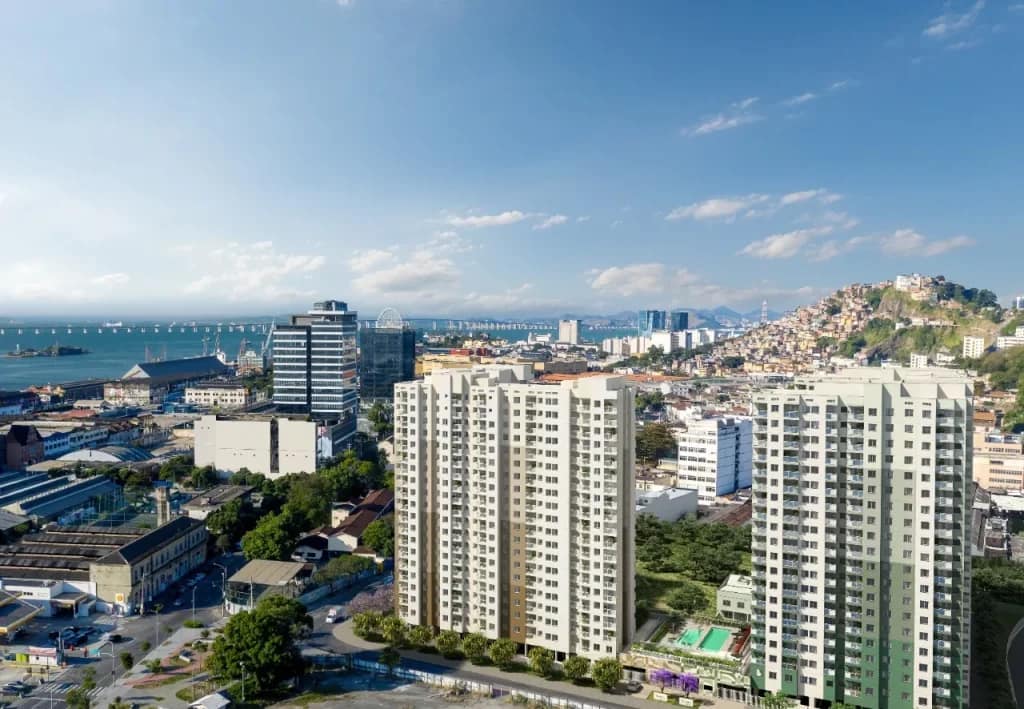
The critical nuance is that Brazil’s risk is profoundly geographic. Favelas, satellite cities on urban peripheries, and areas within 160 kilometres of certain international borders are genuinely dangerous. The coastal neighbourhoods and gated condominium developments where most foreign property investors operate are a different world. In cities like Florianópolis — consistently rated one of the safest large cities in Brazil — or in the luxury developments of Balneário Camboriú, the day-to-day reality for a foreign property owner is considerably safer than headlines suggest. Expats almost universally opt for gated condominiums with controlled access, security guards, and cameras — a standard feature of the Brazilian luxury market.
Financial crime is a separate concern. Corruption scored 35/100 on Transparency International’s 2025 index (rank 107th globally). Investment fraud, cyber scams, and fraudulent real estate representations are real risks that underline the importance of rigorous legal due diligence before any transaction.
| BRAZIL INVESTMENT SAFETY RULE Never transact without a licensed Brazilian attorney and independent title search. Fraudulent land deals and properties burdened by undisclosed debts are materially more common than in common-law markets. For personal safety, choose established gated condominiums in well-rated cities (Florianópolis, Balneário Camboriú, Gramado) over peripheral urban areas. |
Belize: Localised Risk, Manageable for Investors
Belize is not without security challenges. Belize City has elevated rates of gang-related violent crime driven by deep socioeconomic inequality — a real concern for anyone operating in the capital. The overall national crime picture is affected disproportionately by this urban concentration.
For foreign property investors, however, the relevant geography is almost entirely different. Ambergris Caye (home of San Pedro Town), Caye Caulker, Placencia, and the Cayo District are Belize’s primary investment destinations — and these areas have well-established security ecosystems, active tourism police presence, and a long track record of safe foreign residence. Ambergris Caye in particular operates almost as a separate world from Belize City: it is a tourism-dependent island economy where the safety of visitors and foreign residents is an economic imperative.
The country also benefits from institutional security guarantees that Brazil cannot offer. Over 44 years of democratic stability with no coups or political violence means that property rights and business rules have not been rewritten by a sudden change in government. The Guatemalan territorial claim is a perennial political concern but has produced no conflict in modern times.
Side-by-Side: Safety Profile
| 🇳 Belize — Safety ✓ Investment zones (Ambergris Caye, Placencia) are safe ✓ 44+ years of democratic stability; no political violence ✓ Active tourism police in major investment destinations ✓ Property rights never rewritten by regime change ✓ Belize City has elevated crime — avoid for residence ✓ Guatemalan territorial claim: persistent but low-risk | 🇳🇴 Brazil — Safety ✓ Safe cities exist: Florianópolis, Gramado, parts of São Paulo ✓ Luxury gated condominiums provide strong security ✓ US State Dept Level 2 advisory — increased caution ✓ Murder rate 4× higher than US; major urban centres at risk ✓ Favelas and border zones: genuinely dangerous ✓ Investment fraud and fraudulent titles: real risk |
| 🏵️ Edge: Belize For personal safety in investment zones specifically, Belize is meaningfully lower-risk than Brazil’s major urban markets. The small scale of Belize’s tourism economy creates a strong structural incentive to keep investment areas safe. Brazil offers safe havens too — but they require more research, more careful neighbourhood selection, and vigilance that the average first-time foreign investor may underestimate. |
THE OTHER SIDE OF THE LEDGER
Where Brazil Has the Edge
A fair guide cannot simply declare Belize the winner across the board. There are genuine, material reasons why serious investors choose Brazil — and why both countries deserve a place in a diversified international portfolio.
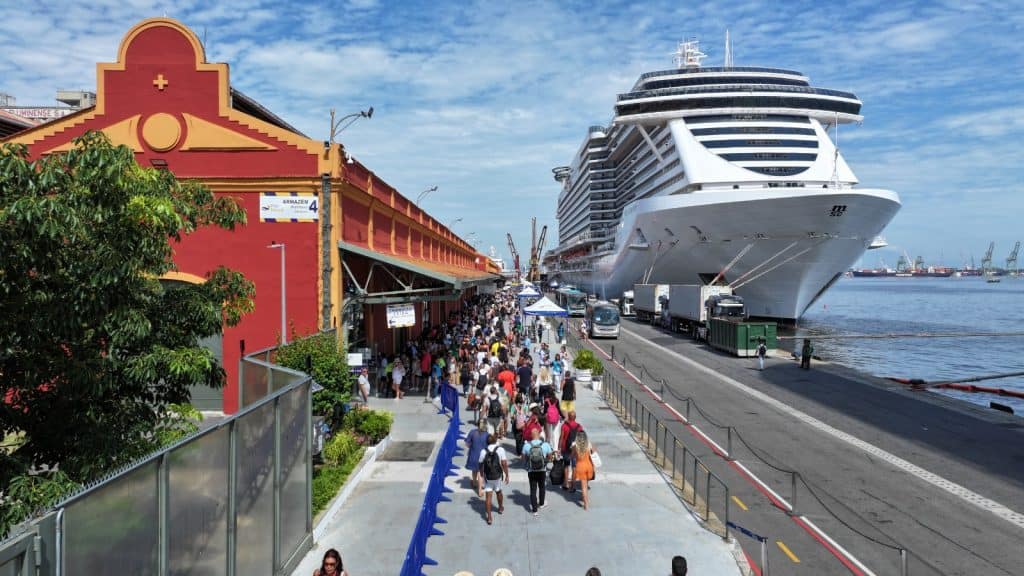
Market scale and liquidity. Brazil’s real estate market is among the largest in the Western Hemisphere. Property in São Paulo’s Vila Madalena or Rio de Janeiro’s Leblon has a liquid secondary market with hundreds of buyers at any price point. Belize’s market, by contrast, is thin — a smaller pool of buyers and a longer average time-to-sell, particularly for premium assets.
Appreciation potential at scale. Balneário Camboriú and Florianópolis have seen beachfront properties appreciate 50–70% over just three years. Secondary cities like Salvador and João Pessoa are posting 17–21% annual price growth. The Brazilian market offers velocity that Belize’s more mature coastal market struggles to match.
Portfolio diversification in a major economy. Brazil is a G20 economy with deep capital markets, a functioning mortgage market, and access to Real Estate Investment Funds (FIIs) that offer tax-efficient exposure without direct property management. For institutional or semi-institutional investors, these vehicles have no equivalent in Belize.
Golden Visa pathway. Brazil offers a Golden Visa (permanent residency) for qualifying real estate investments, providing a formal immigration pathway that Belize’s QRP programme also offers, but Brazil’s is embedded in a larger, globally recognised economy.
The BRL depreciation opportunity. While currency volatility is a risk, a falling Brazilian real means a foreign buyer with USD or EUR acquires property at deep discounts to historical values. For investors with conviction on Brazil’s long-term trajectory, currency weakness is a buying opportunity, not just a danger.
THE VERDICT
Which Country Deserves Your Capital?
The honest answer is that this depends entirely on what kind of investor you are. But here is a practical framework:
| CHOOSE BELIZE IF… You value legal simplicity and want to understand every clause in your purchase contract without a specialist. You are sensitive to currency risk and want your returns denominated in dollars. Your investment horizon is 10+ years and you want to keep 100% of the appreciation gain. You value personal safety in the area where your property sits. You want to hold real estate as a lifestyle asset as much as a financial one — a retirement retreat, a rental income property, or a vacation home you actually use. |
| CHOOSE BRAZIL IF… You are comfortable with complexity and have access to strong Brazilian legal and tax counsel. You are seeking faster near-term appreciation in a market with more price momentum. You want exposure to a G20 economy at what may be a historically undervalued entry point due to BRL weakness. You are targeting liquid markets (São Paulo, Florianópolis) where resale is straightforward. You are interested in Real Estate Investment Funds (FIIs) as a tax-efficient, managed alternative to direct ownership. |
Belize is where you put money you want to keep. Brazil is where you put money you want to grow — accepting that the system will take its share, and that navigating it requires a guide.
The most sophisticated investors may choose both — using Belize’s simplicity and tax efficiency as a bedrock holding, while deploying a tranche into Brazil’s higher-upside coastal markets with eyes wide open. What neither country rewards is the investor who goes in blind, assumes the rules work like back home, and skips the due diligence.
Wherever your capital goes, the same principle applies: invest in the legal counsel before you invest in the property. In Belize, that counsel will cost you far less. In Brazil, the cost of skipping it could be the investment itself.
Disclaimer: This article is for informational purposes only and does not constitute legal, tax, or financial advice. Tax rates, ownership rules, and legal frameworks are subject to change; verify all information with qualified local professionals in each country before making any investment decision.