



Engineering the Future

The Hybrid Vehicle Conquering China’s Streets and Skies
eyesonindonesia
Imagine being stuck in a miles-long gridlock when, with the push of a button, rotors unfold from your vehicle’s roof, lifting you vertically above the chaos. What was once the stuff of science fiction has officially touched down—and taken off—in Southwestern China. In February 2026, the Chinese aerospace industry hit a historic milestone with the successful test of a groundbreaking air-ground hybrid vehicle.
The “Land Aircraft Carrier” and the Power of eVTOL
Developed by the China Aerospace Science and Technology Corporation (CASC), this new model isn’t just a oversized drone or a car with wings. It is a modular, intelligent system that redefines urban mobility.
The vehicle operates in two primary modes:
- Ground Mode: It functions as a sleek, high-performance Electric Vehicle (EV), navigating city streets, following traffic laws, and fitting into standard parking spots.
- Air Mode (eVTOL): Utilizing Electric Vertical Take-off and Landing technology, the flight module can either detach or activate to skip over physical obstacles and traffic jams without needing a runway.
High-Tech Engineering: How Does It Work?
The recent test in Chongqing showcased a seamless transition between travel modes. The engineering behind this “flying car” is a masterclass in aerodynamics and energy efficiency:
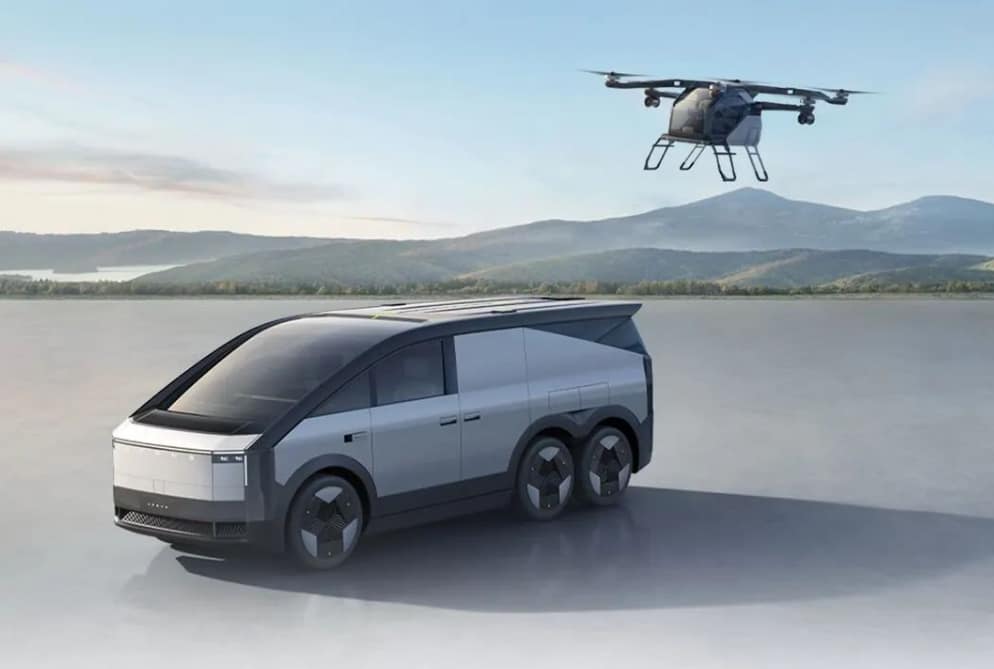
- Modular Decoupling: Leading designs, such as XPENG AeroHT’s “Land Aircraft Carrier,” feature a six-wheeled ground module that carries a detachable aircraft inside its rear cabin.
- Safety Redundancy: To ensure passenger safety, the vehicle utilizes a multi-rotor system. Even if a motor fails, the remaining rotors are programmed to ensure a stabilized emergency landing.
- Autonomous Intelligence: Equipped with high-precision sensors and AI, the vehicle can autonomously plan flight paths, dodge obstacles, and pinpoint charging pads for landing.
“We are witnessing the birth of the ‘Low-Altitude Economy.’ This isn’t just a toy for enthusiasts; it’s a tangible solution for emergency transport, tourism, and urban logistics,” say industry experts.
The Mobility Revolution in China
China is doubling down on this sector. Tech giants like XPENG AeroHT, GAC Group (with its GOVE model), and Chery are in a technological arms race to commercialize these vehicles by the end of 2026.
Why is this 2026 test a game-changer?
- Rapid Certification: The Chinese government is fast-tracking regulations to allow these vehicles to operate in dense urban environments.
- Infrastructure: Hundreds of “vertiports” (airports for eVTOLs) integrated with solar charging stations are already in the planning stages.
- Mass Market Potential: With mass production on the horizon, the cost of these vehicles is projected to drop, bringing them closer to the price point of high-end luxury sports cars.
The Future in the Rearview Mirror
The success of the Chongqing flight proves that the barrier between the asphalt and the clouds is thinning. If the manufacturers’ schedules hold, the skylines of major metropolises will soon feature a new kind of traffic: silent, electric, and entirely vertical.
To truly understand the scale of this revolution, we have to look at the two titans currently battling for dominance in the Chinese “Low-Altitude Economy.” While both are hybrid eVTOLs, they approach the “flying car” problem from two completely different engineering philosophies.
Here is the technical breakdown of the XPENG AeroHT “Land Aircraft Carrier” versus the GAC GOVE.
Comparison Table: XPENG vs. GAC
| Feature | XPENG AeroHT (Land Aircraft Carrier) | GAC GOVE (AirCar) |
| Concept | Modular “Mothership”: A 6×6 van that carries a separate flight module. | Separable Chassis: A flight pod that detaches from a shared ground base. |
| Flight Speed | ~120 km/h (cruising) / 160 km/h max | ~120 km/h cruising |
| Flight Range | ~30 km (designed for short hops/tourism) | ~25 – 30 km |
| Ground Range | 1,000+ km (Range-extended hybrid) | 80 km (Pure electric chassis) |
| Capacity | 4-5 on ground / 2 in flight | 2 passengers (single cabin) |
| Ease of Use | Single-joystick control (5 min to learn) | Fully autonomous flight platform |
| Market Target | Adventure, camping, and remote rescue. | Urban air taxi and city commuting. |
1. XPENG AeroHT: The “Cyber-Carrier”
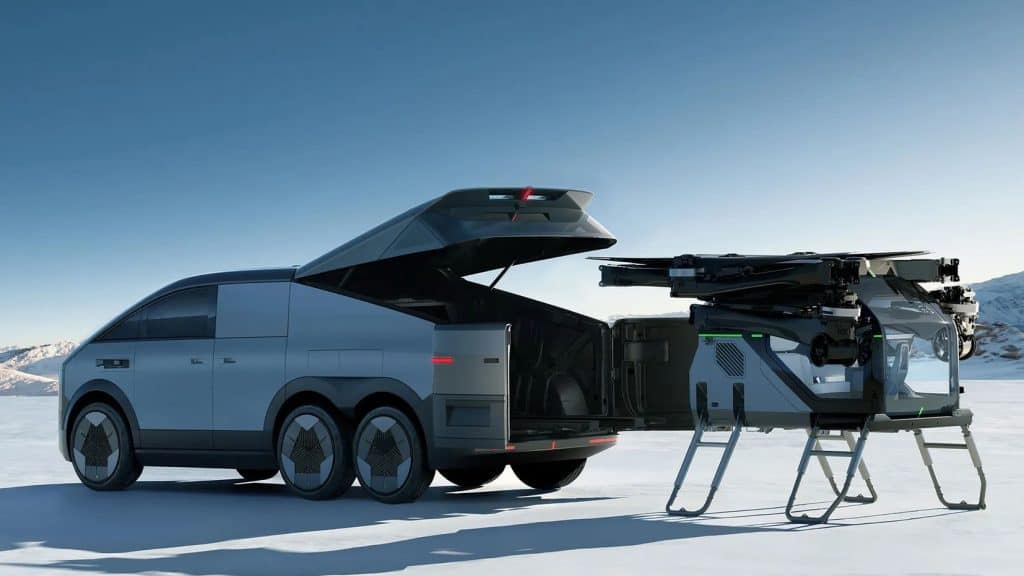
XPENG’s approach is brute force and high utility. Their vehicle looks like a futuristic, 6-wheeled Cybertruck. It is essentially a mobile hangar.
- The Advantage: Because the ground module is a hybrid with a range extender, you can drive 1,000 km into the wilderness and still have enough “juice” to charge the flight module for 5 or 6 consecutive flights.
- The “Magic” Moment: The rear hatch opens, and the eVTOL slides out on rails, unfolds its 6 rotors, and takes off. The van stays on the ground, acting as a command center and charging station.+1
2. GAC GOVE: The “Separable Pod”
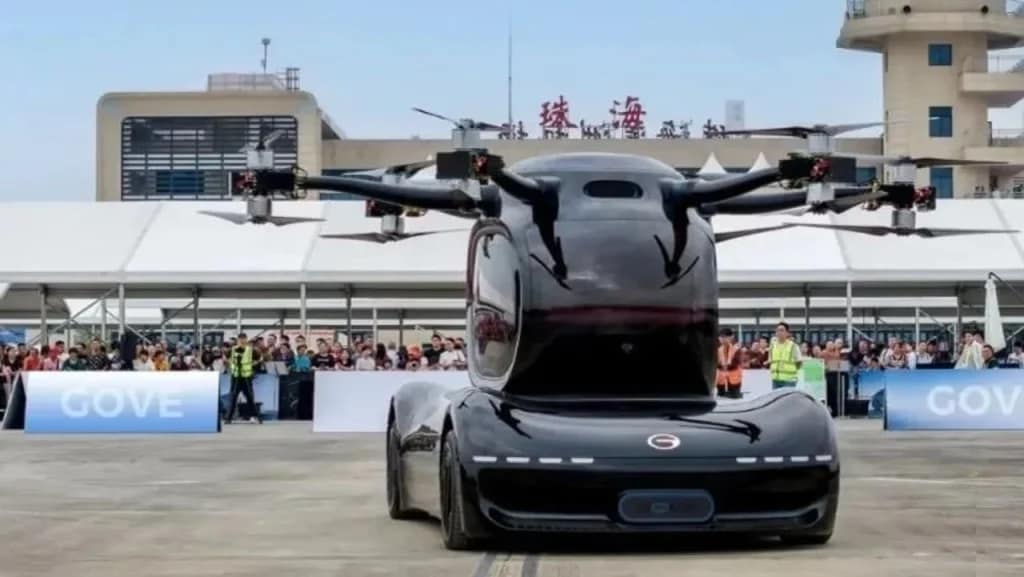
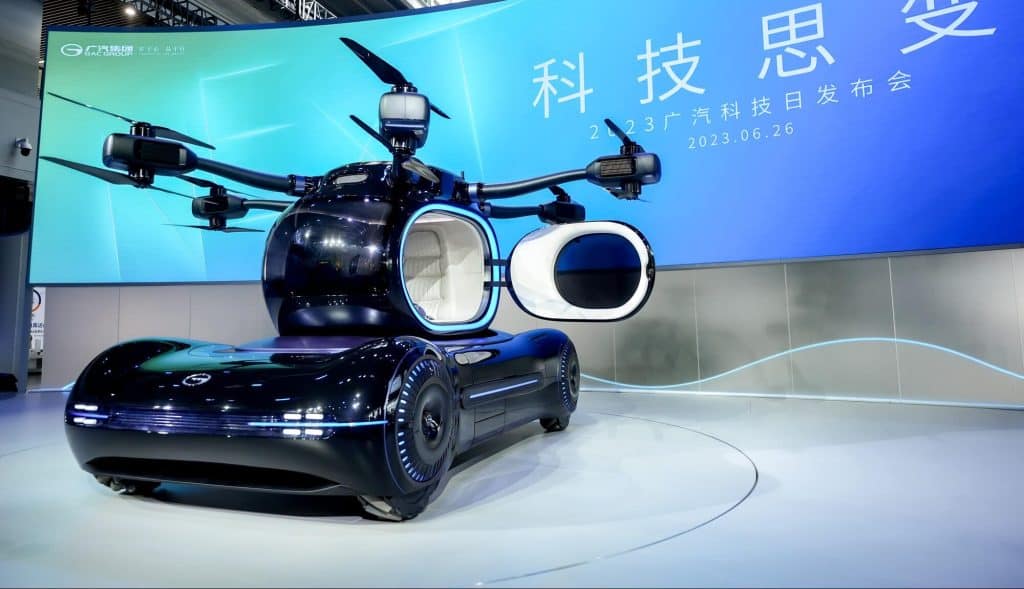
GAC (Guangzhou Automobile Group) went for a more “James Bond” style integration. The GOVE (short for GAC On the Go, Vertical, and Electric) consists of a flight cabin sitting on a flat, skateboard-like chassis.
- The Advantage: It is designed for the “last mile.” Imagine driving to a city gate where traffic is blocked; the cabin simply detaches and flies to a rooftop vertiport, while the chassis autonomously drives itself to a parking spot or a charging hub.
- The “Magic” Moment: The entire top half of the car becomes the aircraft. It is a cleaner, more integrated design for high-density urban environments where you don’t want to haul a massive van behind you.
The Verdict: Which one wins?
- Go with XPENG if you want to explore the mountains, go off-roading, and use the air module to see the views or perform search-and-rescue. It is the SUV of the skies.
- Go with GAC if you are a city dweller looking to bypass morning traffic. It is the urban shuttle of the future.